

Understanding N1 Daily Withdrawal Limits in Nigeria
Learn about the ₦1 maximum daily withdrawal limits on Nigerian banks and fintechs 📉, reasons for these caps, how they impact you, and top tips to manage your cash flow well 💡.
Edited By
James Okoro
Bank transfer deposit limits have become a significant part of everyday banking in Nigeria, particularly as more people engage in digital banking and online transactions. Understanding these limits can help you manage your finances better, avoid transaction delays, or unexpected rejections, especially if you deal with large transfers frequently — like gamblers funding betting platforms, analysts moving investment funds, or tech-savvy youths handling online business.
In Nigeria, these transfer limits vary widely across banks and account types. Typically, banks set daily or monthly limits to curb fraud, meet regulatory requirements, and ensure system stability during peak periods like ember months when transaction volumes spike. For example, a retail bank might allow a daily transfer limit of ₦500,000 on a basic savings account, while premium or corporate accounts could have higher ceilings.

The N1 transfer limit, which some users mention, usually refers to the minimum deposit amount accepted or could relate to small transfers limited under certain conditions. However, it’s important to clarify whether this applies to a specific bank or regulatory guideline, as each bank is allowed to set its own policies within the Central Bank of Nigeria’s framework.
To avoid being caught off guard, consider these practical steps:
Check your bank’s official app or website regularly for updates on transaction limits.
Upgrade your account or complete all KYC (Know Your Customer) verifications; this often raises your permissible transfer amounts.
Reach out to your bank’s customer service if you anticipate frequent large transfers.
By understanding how these limits work—and why they exist—you can plan your transactions better and keep your funds flowing smoothly without hitches. Plus, staying informed helps protect you from potential fraud or security issues linked to unauthorised transfers.
Bank transfer deposit limits define the maximum amount of money you can send or deposit via bank transfer within a specific time frame, usually daily or monthly. Understanding these limits helps you plan your transactions better, especially if you’re someone who handles significant funds regularly, such as betting professionals or casino enthusiasts. For example, if your bank has a daily deposit limit of ₦1 million, trying to deposit ₦2 million in one day will lead to transaction failures, forcing you to split transactions across multiple days.
These limits are crucial for controlling financial flows and ensuring security for both the bank and the customer. They prevent unusual spikes in transactions, which might indicate fraud, and help contain potential losses if your account details are compromised. Knowing what your deposit limit stands at can prevent delays, ensure smoother cash flow, and avoid unexpected transaction declines.
Daily and monthly deposit caps restrict the total sum you can receive through bank transfers either each day or during the month. Sometimes, a bank may allow ₦500,000 deposit daily but cap your total deposits in a month at ₦5 million. This means even if you deposited ₦500,000 every day for 15 days, you would hit your monthly limit and have to pause deposits until the new month.
This system affects users who frequently move money in and out, like tech-savvy youths playing on betting platforms or analysts managing client funds. Daily caps ensure you don't max out your transactions too quickly, preventing bottlenecks. Monthly limits keep long-term transactional activity manageable and secure.
Difference between deposit and withdrawal limits is another key point. While deposit limits restrict the amount you can add to your account via bank transfers, withdrawal limits control how much you can move out, whether by cash withdrawal or online transfers. For instance, a bank might allow a daily deposit limit of ₦1 million but set a withdrawal limit of ₦200,000. This discrepancy helps banks monitor and control cash flow directions and reduces risks in cases of fraud.
If you’re frequently withdrawing large amounts—say, to cash out winnings from betting sites—you must keep these different limits in mind. Mixing them up can cause frustrations, especially when transactions bounce unexpectedly.
N1 serves as the common unit for measuring deposit and withdrawal limits in Nigerian banks. This standardisation simplifies how banks communicate their policies. Whether it’s ₦1,000 or ₦1 million, stating limits in Naira directly relates to your real-life cash flow, so you understand instantly what’s possible.
Take a bettor using a popular sportsbook app: knowing their daily ₦500,000 deposit limit in Naira means they can plan their top-up amounts straightforwardly without converting or guessing. The clarity keeps things efficient and user-friendly.
The impact on transactions and business activities is quite direct. For individuals involved in frequent money movement—gamblers, analysts, or betting pros—these limits dictate how much cash flows daily. If limits are too low, it can slow down operations or force extra trips to the bank or multiple transfers, sometimes attracting unwanted fees.
For example, a casino enthusiast who wins ₦2 million might have to withdraw in stages if withdrawal limits are low, leading to delays and occasional disappointments. Meanwhile, businesses leveraging bank transfers for payments must match their transactional needs with these caps to avoid disruptions.
Understanding your bank’s N1 transfer deposit limits allows you to work within realistic boundaries, plan your funds better, and avoid hiccups in high-stake transactions common in betting or financial analysis.
In summary, knowing what N1 bank transfer deposit limits mean, and how daily and monthly caps function, will save you time and stress. It’s smart to regularly check your limits and request increases where possible to keep your activities hassle-free and secure.
Understanding how deposit limits vary across Nigerian banks is essential, especially for those frequently transacting large sums. Different banks set different limits based on their policies, customer profiles, and regulatory guidelines. Knowing these differences helps you plan transactions better and avoid the frustration of failed transfers, particularly if you are in industries like betting, gambling, or any high-frequency transaction environment.
GTBank typically allows daily transfer limits ranging from ₦250,000 to ₦5 million, depending on the customer's account type and verification status. For most retail customers using the mobile app, the default daily limit is around ₦1 million. This is quite practical for regular bettors or casino enthusiasts who prefer quick deposits without going through lengthy approval processes. If you operate higher-stake betting accounts, GTBank provides options to increase this limit via requests through customer service.
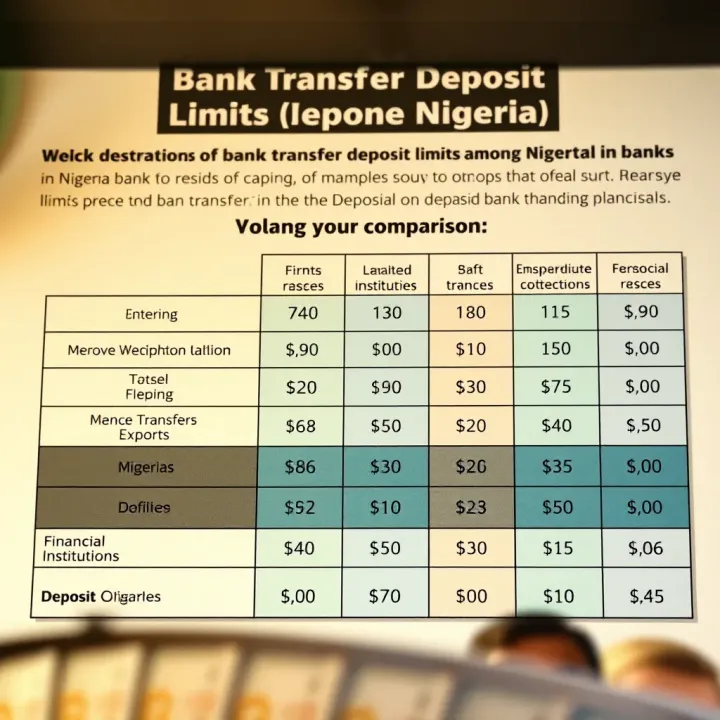
Access Bank sets its deposit limits similarly but tends to be slightly more conservative for new or basic customers, with daily limits often capped at ₦500,000 on digital platforms. However, verified customers with premium or corporate accounts can access limits up to ₦10 million. This tiered approach suits individuals who engage in high-volume transactions, allowing them flexibility while maintaining safety against fraud. Users in betting businesses might need to provide documentation and meet certain transaction frequencies to benefit from higher limits.
Zenith Bank offers daily transfer limits between ₦250,000 and ₦5 million by default, with options for verified customers to adjust limits higher. Zenith’s mobile banking platform allows customers to view and manage these limits conveniently. For heavy users like betting agents, this means they can better handle fund flow by requesting upward review of these caps. Zenith also keeps transactions monitored closely to ensure compliance with Central Bank of Nigeria (CBN) guidelines.
Deposit limits often depend heavily on the type of account you hold. Savings accounts usually have lower transfer limits than current or business accounts. For instance, a regular savings account user might face a ₦500,000 cap per day, while business account holders can push through ₦5 million or more. Account status, such as being dormant or active, also plays a role; active accounts with frequent transactions will typically enjoy higher limits. This aspect matters a lot if you use your account for betting or casino transactions, where large volumes may be common.
The level of KYC (Know Your Customer) verification significantly affects deposit limits. Banks require full verification before increasing transfer limits. For example, if your NIN (National Identification Number) and BVN (Bank Verification Number) are fully verified and linked, the bank is more likely to approve higher limits. Without complete verification, default limits on mobile and online platforms remain low—sometimes just ₦100,000 to ₦300,000 daily, which might not be enough for those in fast-paced betting environments.
Banks also tailor their deposit limits according to their internal policies and external regulations, chiefly directives from the Central Bank of Nigeria (CBN). These guidelines affect how much money you can transfer daily or monthly, influencing risk management and fraud reduction efforts. For example, during heightened fraud alert periods or ember months, some banks tighten their limits temporarily to safeguard customers. Understanding these policies helps you anticipate possible restrictions and better schedule your high-value transfers.
Knowing these differences in deposit limits across banks can save you from needless delays and give you more control over your money, especially when timing is critical in betting and gambling transactions.
By keeping these variations in mind, you can choose the bank that fits your transaction needs best or take purposeful steps to increase your limits for smoother financial flows.
Understanding how to manage and increase your N1 bank transfer deposit limit is vital, especially if you frequently handle substantial transactions, such as those common in betting or trading activities. A higher deposit limit offers more flexibility, prevents failed transfers, and supports smoother business dealings or personal payments.
Using mobile banking apps: Most Nigerian banks have integrated features within their banking apps that allow customers to quickly check their deposit limits. For instance, GTBank’s app shows your daily and monthly deposit capacities right on your dashboard or under your account settings. This quick access helps you plan transactions without surprising delays.
Contacting customer service: If you struggle with app navigation or prefer direct interaction, calling your bank’s customer service provides a reliable alternative. Banks like Access Bank and Zenith Bank offer dedicated phone lines that can tell you your current deposit limit and guide you on how to proceed if you need higher access.
Submitting identification documents: To increase your deposit limits, banks typically require valid identification documents like a National Identification Number (NIN) slip, International Passport, or Driver’s Licence. Providing these confirms your identity and reduces the risk of fraud, paving the way for limit enhancement.
Meeting minimum balance or transaction requirements: Banks may ask you to maintain a minimum account balance or a history of regular transactions before approving higher limits. For example, a Zenith Bank customer might need to keep an average balance of ₦50,000 over three months to be eligible for limit increases.
Understanding bank approval processes: After submitting requests and documents, banks conduct their internal review processes. This can include credit checks or fraud risk assessment and might take a few business days. Patience here is key, as banks must ensure security while accommodating your transfer needs.
Always remember, managing your deposit limits is not just about convenience but safeguarding your funds. Banks balance customer flexibility with security precautions, so following their procedures carefully will help you enjoy increased limits without hitches.
Increasing your transaction capabilities through managing deposit limits enables smoother betting stakes, quick settlement of winnings, and more reliable payment flows for tech-savvy Nigerians. Handling these steps correctly ensures you're not caught off guard during peak transaction times, especially in busy periods like ember months or Sallah celebrations.
Setting deposit limits isn't just a bank formality; it plays a vital role in protecting your money from fraud and keeping your accounts safe. For anyone who regularly moves money—betting professionals, casino enthusiasts, or tech-savvy youths—knowing why these limits exist can help you avoid surprises and secure your transactions.
Banks put deposit limits in place to reduce the chances of large sums being moved without proper checks. Imagine if someone's account details get compromised—without limits, fraudsters could quickly drain funds unnoticed. Banks use these caps as an early-warning mechanism, making it harder for hackers to transfer huge amounts in a single go. This approach significantly lowers the risk of fraud going undetected.
Such limits also help banks monitor suspicious transaction patterns. For example, multiple deposits hitting the limit might trigger alerts, prompting banks to investigate before damage ensues. It’s a practical layer of defence that keeps Nigerian banking safer for customers.
Deposit limits act as a shield against accidental overspending or unauthorised transactions. Even if someone manages to access your banking details, they can’t move more money than your set limit. This helps you avoid unexpected financial losses.
For betting professionals who often deal with large amounts, these limits can appear restrictive, but they actually protect your bankroll in the long run. Banks want to ensure you’re in control, especially when there's a chance of hacking or phishing scams targeting online bettors and gamblers.
Using public Wi-Fi to make bank transfers leaves your details exposed to cybercriminals. Hackers often set up fake or unsecured networks, waiting to intercept sensitive information like your login credentials or one-time passwords (OTPs). For anyone involved in online betting or transferring big funds, using private, secured networks—such as your mobile data or a trusted home connection—is far safer.
If you regularly make high-value transfers, taking this simple precaution helps prevent your account from being accessed illegally and ensures your money reaches the right place.
Changing your passwords and PINs frequently cuts the chance of unauthorised access. Nigerian banks often require strong passwords combining letters, numbers, and symbols; sticking to this advice makes it harder for fraudsters to guess or crack your credentials.
For online gamblers and tech-savvy youths, using unique passwords for each banking app and enabling two-factor authentication (2FA) adds even more security. This way, even if one password leaks, other accounts remain protected.
Keep a close eye on your bank statements and transaction alerts to spot anything unusual. Most banks in Nigeria send SMS or app notifications for every deposit or withdrawal, so you can detect fraud quickly.
Regularly reviewing your transaction history helps you catch small but suspicious transfers before they escalate. For example, if you notice a transfer you didn’t initiate, reporting it immediately to your bank can stop further losses and speed up recovery.
Always view deposit limits not just as restrictions but as tools that bolster your online safety. Knowing why banks enforce these limits and how to secure your transactions empowers you to navigate Nigeria’s financial system with confidence and control.
Understanding common questions about N1 bank transfer deposit limits helps resolve doubts many face when managing their accounts. This section sheds light on practical issues like how deposit limits impact business transactions and what happens if those limits are exceeded. Gambler, analysts, and tech-savvy youths alike benefit from clear guidance on navigating these daily banking rules.
Handling large payments within the confines of N1 bank transfer deposit limits can be tricky. For example, a bettor or casino professional may need to move sums exceeding typical daily limits. If a casino agent tries to transfer ₦1 million, but the daily deposit cap is ₦500,000, the transaction might fail or require splitting into multiple transfers. This situation slows business and risks delays, especially when timing matters for betting or game funding.
Alternatives for heavy transfer needs can help solve this bottleneck. One practical option is visiting a bank branch where higher limits often apply with proper identification. Some banks also offer business accounts with customisable limits after special approval. Digital wallets like OPay or Paystack may let users handle bigger transfers, provided they’ve fulfilled their KYC (Know Your Customer) requirements. Ultimately, the key is knowing your options and which platform fits your transaction volume.
Exceeding your deposit limit typically results in a transaction failure, which can be frustrating and costly if urgent payments stall. For instance, a bettor placing a large stake might find the transfer declined by the bank’s system once it detects the amount surpasses the allowed daily threshold. This automatic block protects your account from potential fraud but can disrupt plans if you’re unaware of the limits.
Banks usually send notifications to alert customers about failed transactions due to exceeding limits. Prompt messages via SMS or email often advise reviewing your limit or contacting customer service. Corrective steps include submitting additional identification, requesting a higher deposit limit, or scheduling transactions to fit allowed thresholds. Staying informed prevents surprises and ensures smooth management of your funds, whether for personal use, betting activity, or business dealings.
Knowing how deposit limits work and the immediate steps after surpassing them can save trouble, especially when timing and funds matter.
In summary, being aware of deposit limits and how they affect transactions prepares you to act fast with alternatives and avoid delays. This knowledge supports smarter financial management across all activities in Nigeria’s banking environment.
Learn about the ₦1 maximum daily withdrawal limits on Nigerian banks and fintechs 📉, reasons for these caps, how they impact you, and top tips to manage your cash flow well 💡.

Learn how Paystack charges deposit fees for N1 transactions in Nigeria, the impact on small businesses, and ways to reduce costs for micro-payments 💳💡

Learn all about Registration Number One (N1) in Nigeria 🇳🇬—its registration steps, legal basics, challenges faced, and latest updates for smooth business and personal use.

⚽ Learn effective football betting tips for Nigerian punters: master betting basics, analyse local match data, manage bankroll wisely, and spot trusted tip sources to improve wins.
Based on 15 reviews